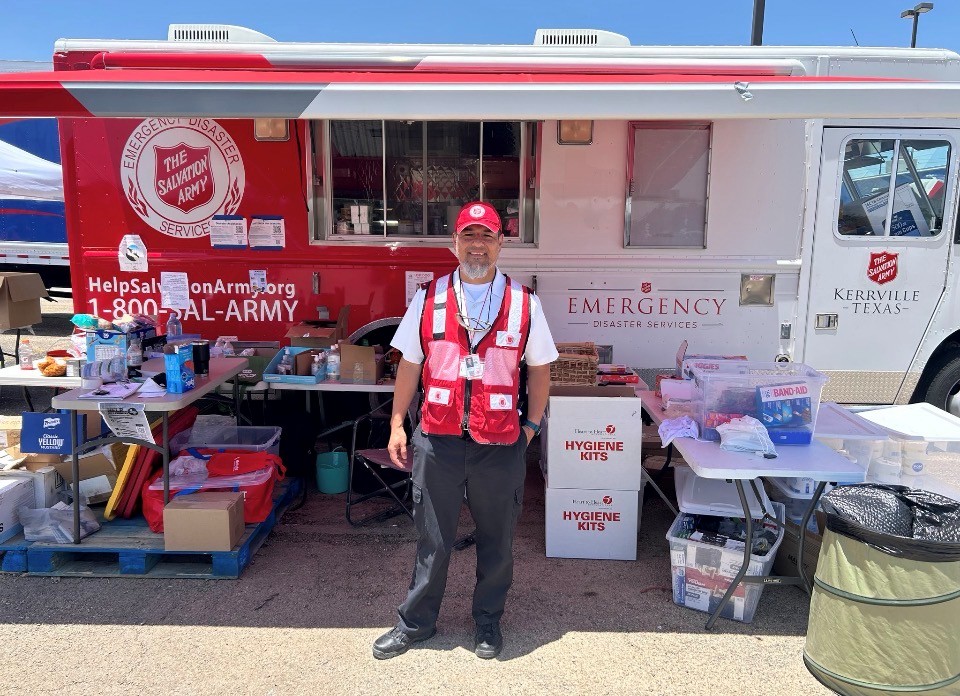
Holding Hope Above the Rising Waters: Capt. Acosta Reflects on Serving Central Texas
In the early hours of July 4, 2025, the rivers of Central Texas rose faster than anyone could prepare for, and by morning, entire communities were underwater.
When alerts first started rolling in, Captain Armando Acosta’s first thought wasn’t about disaster response. He thought of his family. Acosta’s teenage son had been camping near Kerrville. In those initial moments, the floods were personal. Word came that his son was safe and able to get to high ground closer to San Antonio and out of the water's path.
Knowing that his family was safe, Captain Acosta took a deep breath. But he knew that for so many families the same relief would not come. So, he shifted into the role he has carried for more than 13 years and waited for the call to deploy.
Just a few days later, he was on his way to Central Texas. What awaited him was unlike anything he had ever experienced. Rather than taking on his typical assignment, running logistics and feeding operations for disaster response, Acosta was placed on the emotional and spiritual care team. He and a fellow officer, Captain Kenny Jones, spent nearly two weeks on the ground, moving through neighborhoods devastated by the floods, talking to survivors and sitting with first responders who were carrying the weight of what they had seen and done.
One residential neighborhood sitting less than 300 feet from the river’s edge was among the hardest hit. Entire streets had been destroyed. But it was the people who lived in the community who bore the brunt of the destruction. Walking through what had been a place full of life and stability, Acosta and Jones encountered families in varying stages of shock and grief. Many were still reeling from what happened to them just days before.
Among the stories Captain Acosta brought home was one he heard from a worker in that neighborhood. A young mother, alone with her toddler, woke in the wee hours of the morning to find water filling her house. With her child cradled in her arms, she quickly moved from the furniture to the countertop and made her way outside, climbing to her roof. The water continued to rise.
By the time the mother reached the peak of her roof, the water was at her neck. She stood on her tiptoes, holding her baby above her head with one arm and gripping the chimney with the other. She waited in the dark, no power, no light, until she was rescued hours later. They had made it out. They survived.
A week after hearing her story, Acosta returned home. It was a shorter deployment than usual, but by no means an easier one. The work of listening, he shared, drains you differently than physical disaster work does. Acosta and Jones found themselves processing the stories and experiences they heard during the long drives between neighborhoods. The devastation and hurt of the community weighed on them in ways they hadn’t expected.
The Salvation Army’s presence in Kerrville was one piece of a large and immediate community response. For Acosta, the experience reinforced what he has come to understand about disaster work over more than a decade: that sometimes the most important thing you can bring is the willingness to show up and listen.